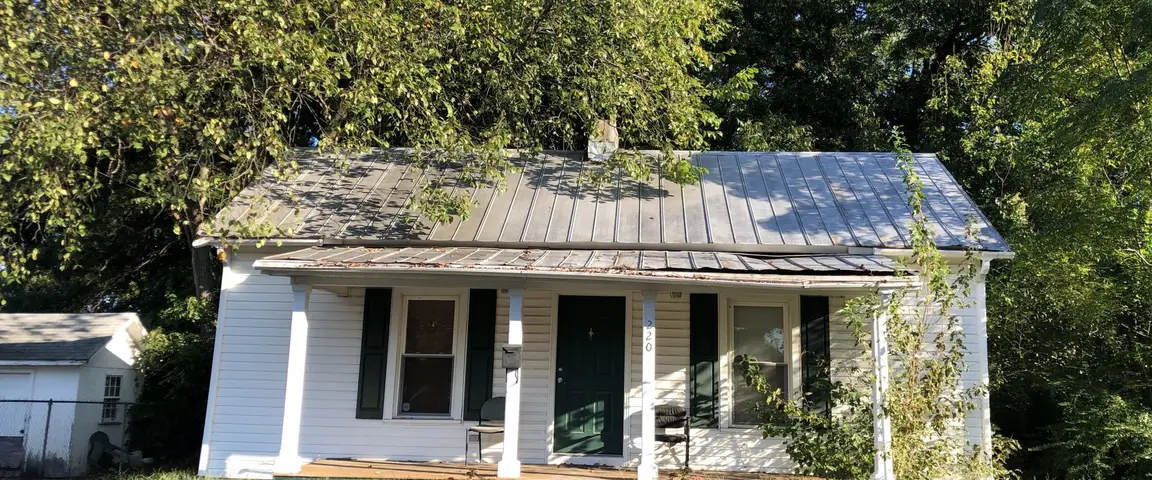
The kitchen needs replacing, the walls need paint, and the roof has a quote. Those are visible items you can put on a renovation worksheet. Water risk is harder to reduce to a single line. A house may look dry during a showing while the lot, crawlspace, driveway, or nearby drainage system raises questions that affect your purchase decision.
If you are considering a fixer-upper in Raleigh, investigate those questions before your budget becomes a commitment. The goal is not to label every property near a creek a bad investment. It is to understand what you are buying, identify what remains unknown, and decide whether the project fits your resources after those issues are priced.
This guide focuses on that one part of the buying process: checking flood and drainage risk before purchasing a Raleigh renovation property. It is a practical research workflow, not a flood determination, insurance quote, engineering opinion, or interpretation of the rules for a particular parcel.
1. Start with the parcel, not a neighborhood reputation
Ask for the exact address and parcel identification before evaluating a map. Check that the house shown in the deal package is the building you are researching. If a sale includes multiple parcels, review each one. A pin near the street is not enough to establish where the structure sits relative to the property boundary or a mapped hazard.
Keep three questions separate: what affects the building, what affects the rest of the lot, and what affects access. A house can occupy one part of a larger parcel while the driveway or area you hoped to improve occupies another. Your planned project may depend on more than the existing building footprint.
For example, suppose your intended renovation includes using the rear yard for contractor access and material storage. If that area raises drainage or access questions, those questions belong in your construction plan even if the front entrance looks straightforward. Record the actual use you expect to make of each area instead of evaluating only the finished house.
2. Use Raleigh’s official flood resources as a starting point
The City of Raleigh’s flood-risk resource page links to a Flood Information Portal with property-specific information. Start there and save the date of your review, the address searched, and the questions the results raise. The city also provides contacts and links for floodplain regulations and flood certificates.
North Carolina’s Flood Risk Information System provides searchable flood-hazard information. Use official resources to assemble the initial picture, then obtain professional clarification where the map or the planned work is difficult to interpret. A map screenshot is a research record, not permission to renovate or a promise that a loss cannot occur.
Write down the source of any conclusion. “The seller said it is fine” and “the relevant professional reviewed this parcel and scope” are different levels of evidence. When information conflicts, keep the conflict visible. Do not choose the version that produces the easiest purchase calculation and discard the rest.
3. Turn the map review into specific questions
A useful first review produces a short list of questions you can resolve. Where is the building in relation to the mapped area? Is the access route part of the concern? Does the proposed work extend beyond the existing structure? Are you relying on information about a neighboring parcel instead of the property being sold?
Send the address, parcel details, and a concise description of your intended work when seeking guidance. Explain whether you plan to repair the current layout, alter it, or add space. Include the map you used so the person responding can understand the starting point. Avoid asking only whether the property is “okay.” That question is too broad to produce a useful project answer.
Maintain an unresolved-issues list with an owner and a deadline for each item. A question assigned to your contractor is different from one awaiting a city response or an insurance quote. This simple record helps prevent a quiet email thread from becoming an assumption that the issue has been cleared.
4. Investigate the property’s water history
Ask what the seller knows about water entry, standing water, drainage work, and repairs to affected areas. Request available photographs, invoices, inspection reports, and other records. If you receive a description of an earlier event, ask which parts of the property were affected and what was done afterward.
The absence of records is not evidence that an event occurred, but it is also not proof that nothing happened. Keep your language precise. “No records provided” is an honest entry in your file. “Never flooded” is a much stronger statement and should not appear in your analysis just because you have not found an invoice.
Pay attention to the difference between correcting damage and correcting its cause. Replaced flooring may document a repair without explaining why water entered. A drainage invoice may describe work without establishing how the property behaves under other conditions. Ask qualified professionals what can reasonably be concluded from the evidence available.
5. Make the walkthrough about observations, not diagnoses
During an authorized visit, photograph visible staining, deteriorated trim, uneven ground, downspout discharge, drainage inlets, and areas where water appears to collect. Note the weather and whether the visit followed rain. A dry-day visit and a wet-day visit can answer different questions, but neither should require you to enter unsafe conditions.
Do not turn a stain into a diagnosis or a clean wall into a guarantee. Bring observations to an inspector or an appropriate specialist. Ask what further inspection is needed and what areas could not be accessed. A concealed or inaccessible space should remain an open item rather than silently becoming a clean result.
Where specialist review is warranted, ask for a written scope. Clarify whether the proposed service identifies a likely cause, recommends work, estimates that work, or evaluates the completed repair. Those are different assignments. Knowing which one you are purchasing helps you understand what the report can support.
6. Check the renovation you actually intend to perform
A plan to replace interior finishes differs from a plan to expand a building or change its footprint. Describe your real scope when checking requirements. Do not research a small cosmetic project and then use that answer to justify a substantially different renovation after closing.
Raleigh publishes information about its floodplain development regulations. Use that page to identify issues to raise with the city, not to decide on your own that an exception applies. Confirm jurisdiction and obtain property-specific guidance before counting an addition or other proposed change in the resale value.
Keep a version of your budget that uses only the work you have established is feasible. Put an uncertain addition in a separate scenario. If the purchase makes sense only when that addition succeeds, resolving its feasibility becomes a condition of your own investment decision, not a minor task to postpone.
7. Get insurance answers before treating the budget as complete
Raleigh’s flood-risk page explains that flood coverage is separate from ordinary homeowners or business coverage. Ask a licensed insurance professional which policies fit your intended ownership and renovation use. Describe the property’s condition and whether it will be vacant or under construction; do not request a quote using a finished-home description if that is not what you will own.
Request the proposed coverage, exclusions, deductibles, effective date, and any conditions in writing. Ask what information is still needed before coverage can be placed. A preliminary estimate with unanswered questions is useful for screening, but it should stay labeled preliminary in your purchase file.
Also discuss the planned exit. If you intend to resell, ask your agent and insurance professional which property documents a later buyer may need to evaluate coverage. Avoid promising a future buyer a particular premium or policy. Your own quote is evidence for your circumstances, not a transferable guarantee.
8. Separate research costs, repair costs, and reserves
Put the cost of additional inspections and professional review in the acquisition analysis. Put confirmed corrective work in the renovation scope. Keep a separate reserve for uncertainty. Combining everything into a vague “miscellaneous” allowance makes it difficult to see what you have actually priced and what you are merely hoping will fit.
Consider a purely hypothetical example. Your initial project estimate includes $40,000 of renovation work. A qualified review then identifies $7,500 of additional work, while further investigation and documentation cost $1,500. The revised identified spending is $49,000 before any separate contingency. Keeping the original $40,000 label would conceal $9,000 of costs already known to you.
Those figures are arithmetic examples, not Raleigh contractor pricing or a forecast for a Wholesale Triangle property. Replace them with quotes for your project. If the additional work also changes the schedule, revise financing and holding costs separately rather than assuming the repair quote captures the full effect.
9. Test a slower and more expensive outcome
A project can lose flexibility before it loses money on paper. A delayed answer, longer repair schedule, or revised insurance requirement may consume cash you expected to use elsewhere. Build a second scenario that reflects the unresolved issues you actually face, rather than adding an arbitrary percentage and calling the review finished.
For each open issue, identify how it could affect the purchase. Could it change the scope, timing, financing, insurance, or intended resale? Some issues affect several categories. Make those connections visible so the same delay does not get overlooked simply because each person on the project is looking at a different worksheet.
Decide in advance what would cause you to pass. That might be an unresolvable access concern, a scope outside your experience, or a revised cash requirement beyond your capacity. A clear limit is more useful than repeatedly adjusting assumptions to preserve your first impression of the deal.
10. Assemble a decision file before committing
Your final file should let another person understand the decision without reconstructing weeks of messages. Include the parcel information, map sources and dates, available property history, inspection findings, written quotes, project guidance, insurance information, and a list of anything still unresolved.
Write a short decision note in plain language. State what you intend to do with the property, which facts support the plan, which assumptions remain, and how the revised costs affect your offer. Keep professional conclusions attributed to the person who provided them rather than rewriting them as your own certainty.
Review the purchase agreement and relevant deadlines with your attorney. Your research workflow does not create contractual protections by itself. If a question remains unanswered as a deadline approaches, get advice about the available choices instead of assuming you can resolve it later without consequences.
Questions Raleigh renovation buyers often ask
Is a map result enough to make the purchase decision?
No single screenshot answers every question about a renovation. Use the result to guide the next steps: property history, physical inspection, professional interpretation where needed, and review of the actual planned work. Keep each conclusion within the limits of the evidence supporting it.
Should I automatically reject a property with water-related concerns?
Your decision depends on the property, your experience, the proposed scope, the available information, and your resources. The important distinction is between an understood issue you can responsibly address and an unknown issue being treated as a discount. A lower price does not explain the work or remove uncertainty.
Can I use the seller’s old repair quote?
Use it as a starting point for questions. Confirm whether its scope still matches the property’s condition, whether the contractor will honor it, and what it excludes. Keep the date visible. An old document can be useful evidence without being a current budget commitment.
What should I send Wholesale Triangle?
Specify Raleigh, the renovation scope you can handle, your purchase range, and any property conditions outside your buying criteria. If an opportunity interests you, request the available documents and arrange your own review. Clear criteria help focus the conversation; they do not replace diligence on the individual property.
Looking for a Raleigh renovation opportunity?
Join Wholesale Triangle’s buyer list and tell us what you want to buy in Raleigh. Review every opportunity against your own property research, repair scope, financing, and timeline. Ask for available information early enough to make a considered decision.
Use our deal-analysis resources to organize the numbers and questions. A useful worksheet keeps verified costs separate from assumptions, preserves the unresolved issues, and helps you compare the property with your actual capacity to complete the work.
This article is educational information. Consult qualified local professionals about the property, insurance, engineering, permits, and purchase terms. Investment results are not guaranteed.